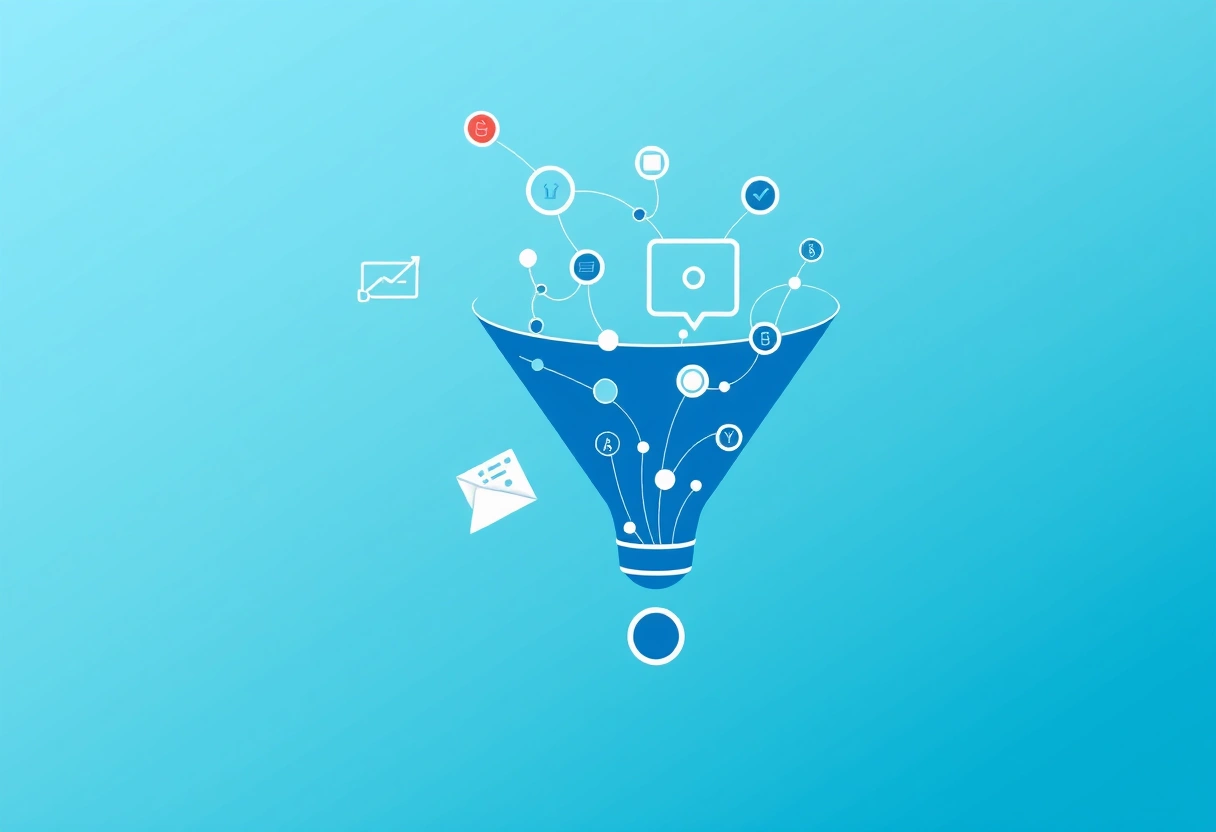
Define Your Target: Precision Over Broad Strokes
For effective b2b lead generation small business efforts, your first step isn't about spending money; it's about clarity. You must know exactly who you're trying to reach. A scattergun approach wastes resources, something a small business cannot afford. Instead, define your ideal customer profile (ICP) with extreme precision.
Building Your Ideal Customer Profile (ICP)
An ICP goes beyond basic demographics. Think about the specific pain points your service solves, the industries that experience those pains most acutely, and the types of companies that are actively seeking solutions. This deep understanding informs every subsequent lead generation activity.
- Industry: Is it SaaS, manufacturing, healthcare, or professional services? Be specific.
- Company Size: Revenue range, employee count (e.g., 50-250 employees, $5M-$50M annual revenue).
- Geographic Location: Local, regional, national, or international?
- Specific Pain Points: What problems do they face that your product or service directly addresses? (e.g., inefficient data management, high employee turnover, slow sales cycles).
- Decision Makers: Who holds the budget and authority? (e.g., Head of HR, Marketing Director, CTO, CEO). What are their common job titles?
- Current Solutions: Are they using a competitor? Are they using nothing at all (manual processes)?
Once you have a clear ICP, you can then find where these prospects congregate online and offline. This makes your outreach highly efficient and cost-effective, a cornerstone of successful b2b lead generation small business strategies.
Content Marketing That Attracts, Not Just Advertises
Creating valuable content doesn't require a huge marketing budget. It demands time, expertise, and a commitment to solving your audience's problems. This strategy builds authority and trust, naturally drawing prospects to your business.
Solving Problems with Blog Posts and Guides
Focus your content on answering common questions your ICP has. If you sell IT support, write about "5 Cybersecurity Threats Small Businesses Face" or "How to Choose the Right Cloud Provider." These topics demonstrate expertise and provide genuine value, positioning you as an authority.
You can publish these articles on your own website, which helps with SEO over time. Share them on LinkedIn, relevant industry forums, and even via email newsletters. The goal is to be helpful first, and sell second.
- Identify Key Questions: Use tools like Google's "People also ask" or AnswerThePublic (free version) to find common queries related to your industry and your ICP's pain points.
- Draft High-Quality Content: Write detailed, actionable articles. Aim for at least 800-1000 words for blog posts. Include internal links to other relevant content on your site.
- Optimize for Search: Use your primary keyword (e.g., "b2b lead generation small business") and related long-tail keywords naturally throughout your content.
- Promote Widely: Share your content on LinkedIn, industry-specific Facebook groups, Reddit communities (where appropriate), and through direct email to relevant contacts.
- Repurpose for Reach: Turn a long blog post into several short social media posts, an infographic, or even a short video script. Maximize the return on your content creation time.
Guest Blogging for Exposure
Guest blogging on other industry websites exposes your brand to a new, relevant audience. Look for blogs that cater to your ICP but aren't direct competitors. Offer to write a high-value article that genuinely benefits their readers. This strategy costs only your time and offers significant credibility and backlink benefits.

Direct Outreach: Smart, Personalized, and Scalable
Cold outreach, when done correctly, remains one of the most effective and budget-friendly methods for b2b lead generation small business success. The key is personalization and targeting, not mass-blasting.
Effective Cold Email Strategies
Forget generic templates. A successful cold email campaign focuses on the prospect's specific situation and pain points, not your sales pitch. Aim for a 1-2% reply rate as a benchmark for initial campaigns.
Here’s a structure that often works:
- Personalized Opening: Reference something specific about their company, recent news, or a shared connection. "I noticed you recently launched [new product]..." or "I saw your company mentioned in [industry article]..."
- Identify Pain Point: Briefly state a common problem your ICP faces that you can solve. "Many businesses in [their industry] struggle with [specific problem]."
- Brief Solution/Value Prop: Explain how you help, without selling hard. "We help companies like yours [achieve specific benefit] by [briefly mention method]."
- Call to Action (Low Friction): Ask for a small commitment, like a 15-minute chat, not an immediate sale. "Would you be open to a quick 15-minute chat to explore if this could be relevant?"
Tools like EasyMapLeads can significantly streamline this process. You can use EasyMapLeads to pull verified business emails and phone numbers directly from Google Maps listings, focusing on businesses within your ICP. It also generates AI-powered personalized icebreakers, saving you hours of research and helping you craft compelling first lines that stand out in an inbox.
LinkedIn as a Lead Generation Machine
LinkedIn offers unparalleled access to decision-makers. It's a powerful tool for b2b lead generation small business owners. Start by optimizing your profile to clearly state who you help and how. Then, engage strategically.
LinkedIn Outreach Workflow:
- Identify Prospects: Use LinkedIn's search filters (industry, title, company size, location) to find individuals matching your ICP.
- Engage with Their Content: Before sending a connection request, like or comment thoughtfully on their recent posts. Show genuine interest.
- Personalized Connection Request: Don't use the generic LinkedIn request. Mention something specific you found on their profile or a piece of their content. "I enjoyed your post on [topic], I'd love to connect with fellow [industry professionals]."
- Follow-Up with Value: Once connected, don't immediately pitch. Send a brief message thanking them for connecting and offer a valuable resource (e.g., a relevant article you wrote, a helpful industry report) without asking for anything in return.
- Build a Relationship: Continue to engage with their content. Over time, a genuine relationship can lead to a natural conversation about their needs and your solutions.
A/B Testing Your Outreach Messages
Even on a budget, you can run simple A/B tests to optimize your outreach. Compare different subject lines, opening lines, or calls to action to see what resonates best with your audience. This iterative approach refines your message and improves your conversion rates over time.
| Element to Test | Example A | Example B | Hypothesis |
|---|---|---|---|
| Email Subject Line | Quick Question about [Company Name] | [Your Company] + [Their Company] - Idea for [Benefit] | Direct vs. Value-driven subject line. |
| Email Opening Line | "I hope this email finds you well." | "I noticed your recent article on [topic]." | Generic vs. Highly personalized. |
| Call to Action | "Are you free for a 30-min demo next week?" | "Would you be open to a quick 15-min chat to discuss X?" | High commitment vs. Low commitment. |
| LinkedIn Connection Msg | "Hi [Name], I'd like to connect." | "Hi [Name], saw your work at [Company], keen to connect." | Generic vs. Slightly personalized. |
Track your open rates, reply rates, and conversion rates for each variation. Even a small improvement can significantly boost your lead generation efforts without increasing your spend.
Networking and Community Building: Real Connections, Real Leads
Relationships are the bedrock of B2B sales. Networking, both online and offline, is a powerful and often free way to generate leads. It's about being present, offering value, and building trust over time.
Participate in Online Communities
Identify active online forums, LinkedIn groups, Reddit subreddits, or Slack communities where your ICP is present. Don't join just to pitch. Contribute genuinely, answer questions, and share insights. When you establish yourself as a helpful expert, people will naturally inquire about your services.
"The most effective way to build a pipeline is to stop thinking of it as 'sales' and start thinking of it as 'service.' When you consistently serve your ideal clients, even before they pay you, the sales will follow naturally." – Jill Konrath, Sales Strategist
This approach requires patience but yields high-quality, pre-warmed leads. When someone reaches out because they've seen your helpful contributions, they already trust you to some extent.
Local Business Groups and Associations
Don't overlook local opportunities. Chambers of Commerce, industry-specific associations, and local business meetups are excellent places to connect with other business owners. Attend events, introduce yourself, and focus on learning about others' businesses before talking about your own. These connections can lead to direct leads, partnerships, or valuable referrals.
Consider joining groups related to your clients' industries, not just your own. If you offer marketing services to dentists, attend dental association meetings. This gives you direct insight into their specific challenges and allows you to network with potential clients where they feel most comfortable.
Leverage Existing Success: Referrals and Testimonials
Your existing happy clients are your most powerful and cost-effective lead generation tool. Harness their satisfaction to bring in new business. This is often overlooked in the pursuit of new leads, but it's crucial for sustained b2b lead generation small business growth.
Ask for Referrals (The Right Way)
Don't wait for referrals to happen spontaneously. Implement a system for asking. The best time to ask is immediately after a client expresses satisfaction or after a successful project completion. Make it easy for them to refer you.
- Client Success Stories: Ask if they'd be willing to share their experience as a case study or testimonial.
- Direct Ask: "We're always looking to help businesses like yours achieve [specific benefit]. Do you know anyone in your network who might also benefit from our services?"
- Incentivize (Optional): For some businesses, a small referral bonus (e.g., a gift card, a discount on future services) can encourage more referrals.
Remember, a warm referral is significantly easier to convert than a cold lead, saving you time and marketing spend.
Showcase Your Wins with Testimonials and Case Studies
Social proof is incredibly powerful. Collect testimonials and develop detailed case studies highlighting how you helped specific clients achieve measurable results. These assets are gold for your website, sales pitches, and outreach efforts.
Steps for Effective Case Studies:
- Identify a Success Story: Choose a client who achieved significant, quantifiable results with your help.
- Gather Data: Document the "before" state (their challenge), the "during" (your solution), and the "after" (their results). Include specific metrics (e.g., "increased sales by 20%", "reduced operational costs by 15%").
- Get Client Approval: Always get explicit permission from your client to use their name, company, and story. A quote from them adds authenticity.
- Format Clearly: Present the case study on your website in an easy-to-read format. Use headings, bullet points, and visuals.
- Distribute Widely: Share case studies in your email signature, during sales calls, and link to them in your content and social media posts.
These real-world examples build credibility and demonstrate your value more effectively than any sales pitch. They are a low-cost, high-impact method for b2b lead generation small business owners.
Frequently Asked Questions
What are the absolute cheapest ways to generate B2B leads?
The cheapest ways include highly personalized cold email and LinkedIn outreach, content marketing (blogging, social media posts), asking for referrals from existing clients, and participating in online industry communities.
How can I find my ideal B2B customers without spending money on market research?
Start by analyzing your current best customers to identify common traits. Use free tools like LinkedIn search filters, Google search, and industry forums to research company demographics, roles, and pain points.
Is cold email still effective for B2B lead generation?
Yes, cold email is still highly effective when executed with extreme personalization and a focus on providing value, not just pitching. Generic, mass emails are largely ignored, but targeted, well-researched emails can yield strong results.
How important is social media for B2B lead generation on a budget?
Social media, particularly LinkedIn, is crucial for budget-conscious B2B lead generation. It allows you to build authority, engage with prospects, and share valuable content without direct advertising costs.