Optimize Your Digital Footprint for Local Discoverability
Your online presence is your most accessible storefront for B2B clients, especially for local services. Neglecting it means missed opportunities to generate b2b leads free when prospects are actively searching for solutions. Focus on making it easy for them to find you, understand what you offer, and contact you.
Master Your Google Business Profile (GBP)
This is often the first place potential B2B clients look. Treat your GBP like a mini-website. Fill out every section completely and accurately. Here’s a quick checklist:
- Business Name: Ensure it matches your legal business name.
- Address & Service Areas: Clearly define where you operate. If you’re a service-area business, hide your physical address but list your service regions.
- Phone Number & Website: Double-check they are correct and clickable.
- Categories: Select all relevant categories for your business type (e.g., "IT consulting," "Commercial cleaning service," "Marketing agency").
- Description: Write a concise, keyword-rich overview of your services and who you help.
- Hours: Keep these updated, especially for holidays.
- Photos: Upload high-quality photos of your office, team, and work in action. Businesses with photos receive more clicks.
- Reviews: Actively encourage clients to leave reviews. Respond professionally to all reviews, positive or negative.
- Posts: Regularly share updates, offers, and news using the "Posts" feature. This keeps your profile active and visible.
An optimized GBP helps you rank higher in local search results and Google Maps, making it simpler for businesses in your area to find you when they need your specific services.
Your Website: A Clear Value Proposition
Your website doesn't need to be fancy, but it must be clear and functional. Within seconds, a visitor should understand:
- What you do: Your core service.
- Who you help: Your ideal client.
- How to contact you: Prominent phone number, email, or contact form.
Include testimonials or case studies, even simple ones, to build trust. Ensure your site is mobile-friendly, as many prospects might be searching on their phones.
Create Problem-Solving Content, Not Just Blog Posts
Content marketing, when done right, is a powerful way to generate b2b leads free by establishing your authority and attracting prospects who are searching for solutions to their business problems. Focus on providing genuine value.
Identify Your Clients' Pain Points
What are the biggest challenges your ideal clients face that your service solves? Brainstorm specific questions they might type into Google. For instance, if you're an IT consultant, they might search "how to secure small business network" or "best CRM for construction companies."
Types of Free Content That Attract Leads
You don't need fancy videos or elaborate whitepapers to start. Here are effective, low-cost content types:
- "How-to" Guides: Step-by-step instructions for solving a common problem related to your service. E.g., "How to Set Up Basic Cyber Security for Your Small Business."
- Checklists & Templates: Provide downloadable resources that simplify a task. E.g., "Website SEO Audit Checklist for Small Businesses."
- Comparison Articles: Help prospects evaluate options. E.g., "X vs. Y Software: Which Is Right for Your Small Business?"
- Industry Insights: Share your perspective on trends, common mistakes, or best practices.
Publish this content on your blog, LinkedIn articles, or even as detailed posts in relevant industry forums (without being overtly promotional).
Distribute Your Content Strategically
Creating content is only half the battle; people need to see it. Share your articles on LinkedIn, focusing on relevant groups where your target audience congregates. Post snippets on Twitter or Facebook with links back to your site. Include links to your best content in your email signature. You can also repurpose a blog post into an email newsletter for existing contacts.
"The most effective content for B2B lead generation isn't about selling your product directly. It's about educating your audience, solving their immediate problems, and building trust. When you give generously, prospects remember you as a helpful resource, not just another vendor."

Engage in Strategic Networking & Community Building
Networking remains a cornerstone of B2B lead generation, and many opportunities to connect with potential clients and referral partners cost nothing more than your time and effort. This is a direct way to generate b2b leads free by building relationships.
Offline Networking That Works
Look for local business groups that offer free or low-cost introductory meetings. Your local Chamber of Commerce often has free events for non-members to get a taste. Attend industry-specific meetups or workshops relevant to your target clients. The key is to go with a "how can I help?" mindset, not just to pitch your services. Listen more than you speak. Collect business cards and follow up with a personalized email the next day.
Online Communities: LinkedIn and Beyond
LinkedIn is your primary B2B social platform. Join groups where your ideal clients discuss their challenges. Participate thoughtfully by answering questions, sharing insights, and offering advice without self-promotion. Over time, you'll build credibility, and people will naturally look at your profile. Connect with decision-makers you meet offline or through mutual connections. Personalize every connection request; a generic request often goes ignored.
Beyond LinkedIn, consider industry-specific forums, Reddit communities (like r/smallbusiness or niche subreddits), or even local Facebook groups where business owners gather. Again, provide value first. Answer questions, offer solutions, and establish yourself as an expert. Direct selling in these groups is usually frowned upon and can get you removed.
Cultivate Referral Partnerships
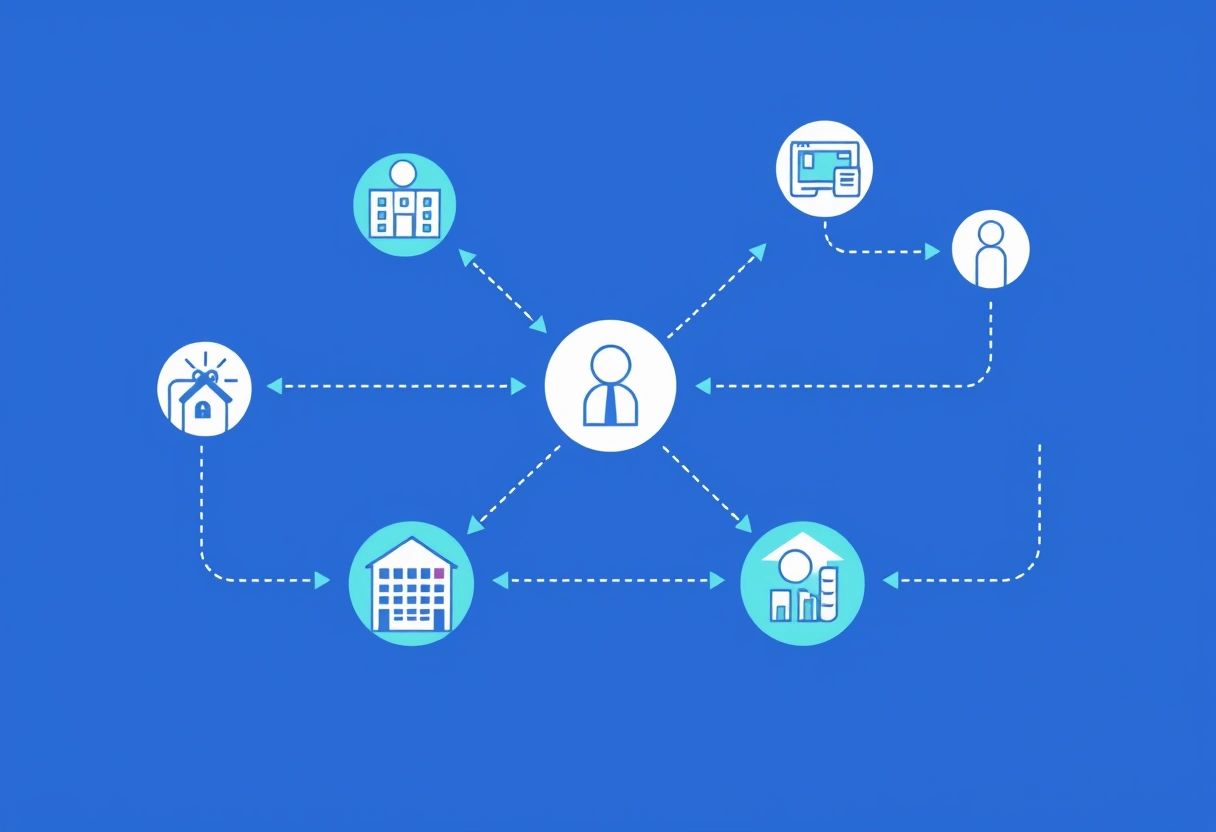
Identify businesses that serve your ideal client but don't compete with you directly. For example, if you're a web designer, an accountant or a commercial photographer might be an excellent referral partner. Meet with them, understand their services, and explain who your ideal client is. Agree on how you can refer business to each other. These partnerships can be highly effective for generating warm, qualified leads at no cost.
Direct, Personalized Outreach (The Free Way)
While often associated with paid tools, direct outreach can be incredibly effective to generate b2b leads free if you're strategic and personalize your approach. It's about identifying potential clients and reaching out in a meaningful way.
Finding Your Target Prospects
Google Maps is an underrated goldmine for local B2B lead generation. Search for specific business types in your service area (e.g., "dentists in [your city]," "plumbers [nearby town]"). You'll find their names, addresses, phone numbers, and often their websites. This gives you a clear list of potential leads.
For more efficient data extraction, tools like EasyMapLeads can help you extract verified business emails and phone numbers directly from Google Maps listings based on your target criteria. This saves significant manual effort and provides accurate contact details, along with generating AI-powered personalized icebreakers for your outreach.
LinkedIn Sales Navigator offers a free trial, which you can use strategically to build targeted lists. Look for specific job titles, industries, and company sizes that fit your ideal client profile.
Crafting Personalized Outreach Messages
Generic messages are ignored. Your message must show you've done your homework. Mention something specific about their business, a recent achievement, or a challenge you've observed. Focus on how you can potentially help them, not just what you sell.
Cold Email & LinkedIn Message Personalization Examples
| Generic Message | Personalized Approach |
|---|---|
| "I help businesses grow their online presence. Are you interested in a free consultation?" | "I noticed your recent article on [topic X] – fascinating insights! Given your focus on [industry], I believe our [service Y] could help you achieve [specific benefit related to X]." |
| "We offer top-tier IT support. Let me know if you need help with your systems." | "I saw your company recently expanded to [new location]. With that growth, you might be facing new challenges around [specific IT issue]. We specialize in helping businesses like yours manage that transition smoothly." |
| "Connecting to expand my network." | "[Name], I came across your profile in the [Industry] LinkedIn group and was impressed by your work at [Company Name]. I'd appreciate connecting to learn more about your perspective on [industry trend]." |
Aim for a soft ask in your initial outreach – perhaps a quick chat, an offer of a helpful resource, or a question to spark a conversation. The goal is to start a relationship, not close a deal immediately.
Leverage Testimonials and Case Studies
Social proof is incredibly powerful in B2B sales, and it costs nothing to collect and share once you have satisfied clients. Using client success stories effectively helps you to generate b2b leads free by building immediate trust.
Collect and Showcase Client Testimonials
After a successful project or a client expresses satisfaction, ask them for a testimonial. Make it easy for them: provide a few guiding questions or even draft a short testimonial for their approval. Ask for their name, title, and company name to add credibility. Display these prominently on your website, in your email signature, and on your LinkedIn profile.
Don't just collect text testimonials. If a client is willing, a short video testimonial or a professional headshot with their quote can be even more impactful.
Create Simple Case Studies
Case studies tell the story of how you helped a client achieve a specific result. They don't need to be elaborate. A simple structure works best:
- Client & Background: Who was the client, and what was their business about?
- The Challenge: What problem were they facing before they hired you? Be specific.
- Your Solution: What did you do to address their challenge? Outline your services or approach.
- The Results: What measurable outcomes did the client achieve? Use numbers whenever possible (e.g., "increased sales by 15%," "reduced operational costs by $5,000," "saved 10 hours per week").
- Client Quote: Include a direct quote from the client about their satisfaction.
Publish these case studies on your website, share them on LinkedIn, and use them in your direct outreach. They provide concrete evidence of your value and help potential clients envision similar success for themselves.
Foster a Referral Ecosystem
Many small businesses rely heavily on word-of-mouth, and for good reason: referrals are often the highest quality leads. Building a structured approach to referrals can help you continuously generate b2b leads free.
Identify Complementary Businesses
Think about other businesses that serve your ideal clients but offer non-competing services. For instance, if you're a marketing agency, an accounting firm, a business coach, or a legal service provider could be excellent referral partners. Their clients likely need your services at some point, and vice-versa.
Build Reciprocal Relationships
Approach these potential partners with a clear offer of mutual benefit. Suggest a meeting to understand each other's services and ideal client profiles. The goal is to educate them on when and why they should refer someone to you, and for you to do the same for them. This isn't about formal contracts, but about establishing trust and a clear understanding of each other's value proposition.
Make it Easy for Others to Refer You
Provide your referral partners with simple ways to pass on leads. This could be a one-sheet summary of your services, your business cards, or a dedicated email address for referrals. When you receive a referral, follow up promptly and thank the referrer, keeping them in the loop on the lead's progress (with client permission, of course).
Remember to reciprocate. Actively look for opportunities to refer your partners to your network. A strong referral ecosystem is built on mutual trust and consistent effort.
Frequently Asked Questions
How quickly can I see results from free B2B lead generation?
Free B2B lead generation strategies typically require consistent effort over several weeks or months to yield significant results. Building trust and authority through content and networking is a gradual process.
What's the most effective free platform for B2B lead generation?
LinkedIn is generally considered the most effective free platform for B2B lead generation due to its professional focus, robust networking features, and ability to target specific business roles and industries.
Can I really generate b2b leads free without any tools?
Yes, you can generate B2B leads for free using manual methods like Google Maps, direct website searches, and personal networking, although tools like EasyMapLeads can significantly streamline the process and improve efficiency for free.
How do I track my free B2B lead generation efforts?
Track your efforts using a simple spreadsheet to log outreach, content performance through website analytics (Google Analytics), and referral sources. This helps you understand what's working best to generate b2b leads free.