Optimizing Your Google Business Profile for Local Search Dominance
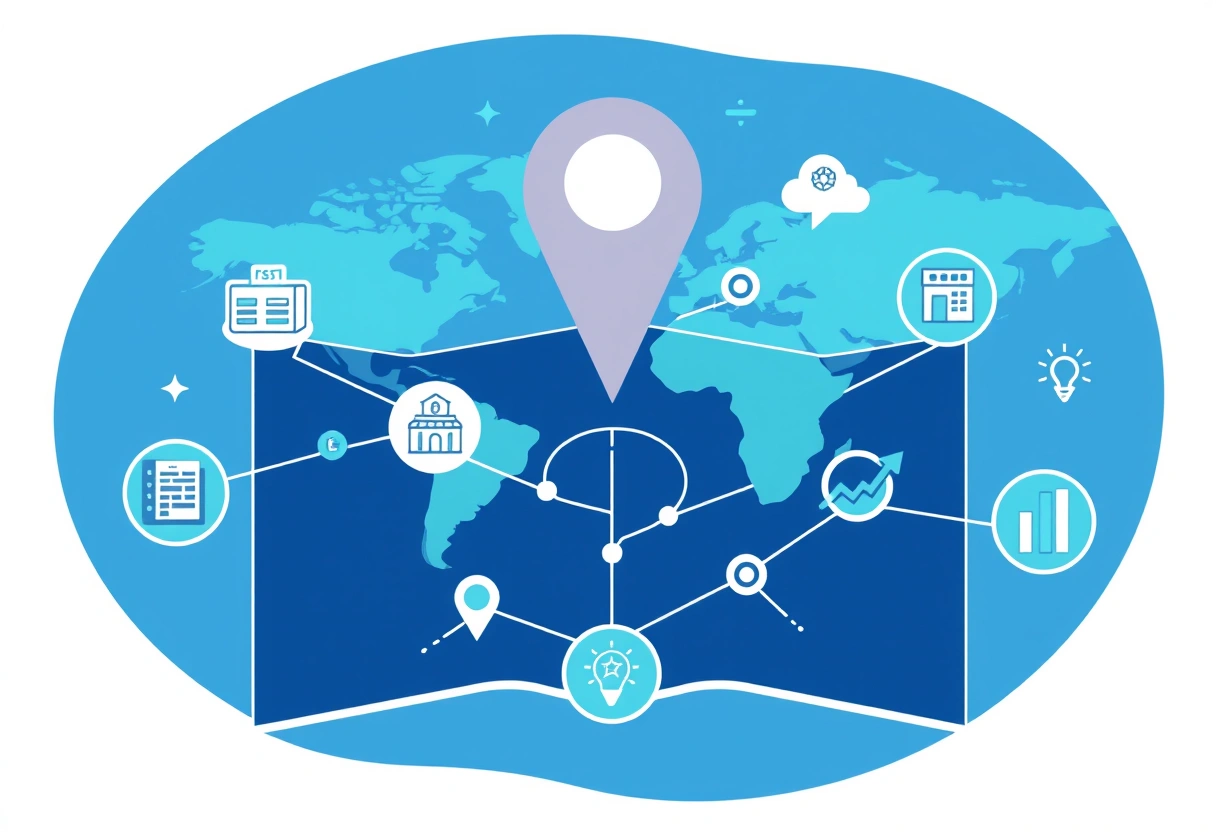
Your Google Business Profile (GBP) is the cornerstone of your presence on Google Maps. Think of it as your virtual storefront. An incomplete or outdated profile is like having a "closed" sign perpetually hanging. To start improving your small business local SEO, you need to ensure every detail is precise and compelling.
Claim, Verify, and Maximize Your GBP
First, claim and verify your GBP. This usually involves a postcard by mail or a phone call. Once verified, you gain full control. Spend time filling out every single field Google provides.
- Business Name: Use your exact, legal business name. Do not stuff keywords here; Google penalizes this.
- Address: Ensure it's precise and matches what's on your website and other directories.
- Phone Number: Use a local number if possible.
- Website: Link directly to your primary business website.
- Hours of Operation: Keep these updated, especially for holidays. Accurate hours prevent frustration and negative reviews.
- Categories: This is critical. Choose your primary category carefully, then add as many relevant secondary categories as apply to your business. For instance, a coffee shop might use "Coffee Shop" as primary, then "Cafe," "Bakery," and "Breakfast Restaurant" as secondary.
- Services/Products: Detail all services or products you offer. Use specific keywords customers might search for. For a plumber, list "drain cleaning," "water heater repair," "leak detection."
Showcase Your Business with High-Quality Media
Visuals matter immensely. Google reports that businesses with photos get 42% more requests for directions and 35% more clicks to their websites than those without. Upload a minimum of 10-15 high-quality photos:
- Your logo and cover photo.
- Exterior shots of your business from different angles.
- Interior shots showing your space and ambiance.
- Photos of your products, services in action, or staff.
- Short videos (up to 30 seconds) can be even more engaging.
Regularly add new photos to keep your profile fresh and show Google you're an active business.
Utilize Google Posts and Q&A
Google Posts are mini-blog updates directly on your GBP. Use them to announce promotions, events, new products, or important updates. Post at least once a week. The Q&A section allows customers to ask questions, and you can answer them. Proactively seed this section with common questions and answers to provide instant value to potential customers.
Mastering Online Reviews: Trust and Visibility Boosters
Customer reviews are arguably the most impactful ranking factor for Google Maps. They signal trust, relevance, and authority to Google. Positive reviews also directly influence potential customers' decisions.
Strategies for Earning More Reviews
Don't wait for reviews to happen; actively solicit them. Make it easy for customers to leave feedback.
- Direct Ask: Simply ask satisfied customers in person, via email, or SMS. "We'd love it if you shared your experience on Google!"
- QR Codes: Create a QR code that links directly to your Google review page. Display it prominently at your checkout counter, on receipts, or business cards.
- Follow-up Emails: If you collect customer emails, send a polite follow-up after service, including a direct link to leave a Google review. Tools that automate post-purchase emails often have review request integrations.
"Many small businesses assume great service is enough for reviews. It's not. You have to make the 'ask' a standard part of your customer journey, whether it's a gentle nudge at checkout or an automated email. The easier you make it, the more reviews you'll get."
Respond to Every Review, Positive or Negative
Your responses are visible to everyone and demonstrate excellent customer service. Aim to respond within 24-48 hours.
For Positive Reviews: Thank the customer by name, mention something specific about their feedback, and invite them back. Example: "Thanks, Sarah! We're glad you enjoyed our cappuccino and the quick service. Hope to see you again soon!"
For Negative Reviews: Empathize, apologize for their experience, and offer to resolve the issue offline. Do not get defensive. Example: "We're truly sorry to hear about your experience, John. We strive for better and would like to make this right. Please call us directly at [phone number] so we can discuss this further."
Beyond the Profile: Website SEO and Local Citations
While your GBP is central, your website and overall online presence play a significant role in your small business local SEO performance. Google cross-references information across the web to confirm your legitimacy and relevance.
Optimize Your Website for Local Search
Your website should reinforce your local presence. Make sure your business's Name, Address, and Phone number (NAP) are prominently displayed on every page, ideally in the footer. Also, consider a dedicated "Contact Us" page with an embedded Google Map.
Integrate local keywords naturally into your website content. If you're a "dentist in Seattle," use variations like "Seattle dental services," "dentist near me Seattle," or "best Seattle dentist" in your page titles, headers, and body text. Create specific service area pages if you serve multiple towns, each optimized for that location.
Building Consistent Local Citations
A "citation" is any online mention of your business's NAP, even without a link to your website. These include online directories, social media profiles, and local business listings. Consistency is key here. Inaccurate or conflicting information confuses Google and can hurt your rankings.
Here's a breakdown of common citation sources:
| Citation Type | Examples | Importance |
|---|---|---|
| Major Data Aggregators | Yext, Foursquare, Data Axle (Infogroup), Neustar Localeze | Feed data to hundreds of other sites. Crucial for foundational accuracy. |
| Industry-Specific Directories | Yelp, TripAdvisor, Healthgrades, Avvo | Highly relevant for specific niches. Often trusted by Google for context. |
| Local Chamber of Commerce | Your city's Chamber of Commerce website | Strong local signal, often carries authority. |
| Social Media Profiles | Facebook, Instagram, LinkedIn | Consistency across these popular platforms reinforces your identity. |
Manually check your listings on these sites. Correct any discrepancies in your business name, address, or phone number immediately. A small difference, like "St." vs. "Street," can cause issues.
Community Engagement and Local Content Strategies
Ranking well isn't just about technical SEO; it's also about demonstrating real-world local relevance. Google wants to see that your business is an active part of the community it serves.
Create Hyper-Local Content
Start a blog on your website and write about topics relevant to your local area. This isn't just for attracting visitors; it also signals local relevance to Google.
- Local Event Guides: "Top 5 Family-Friendly Activities in [Your City] This Summer."
- Neighborhood Spotlights: "Exploring the Best Coffee Shops in the [Your Neighborhood] District."
- Community News: Comment on local developments or support local causes.
- "Best Of" Lists: If you're a restaurant, perhaps "Our Favorite Local Breweries to Pair with Our Menu."
These types of articles attract local traffic, can earn local backlinks, and deepen your connection to the community, all contributing to effective small business local SEO.
Engage with Your Local Community
Offline efforts can translate to online benefits. Participate in local events, sponsor a youth sports team, or host a workshop. When you're actively involved, you increase brand awareness and the likelihood of local publications or bloggers mentioning your business, which can lead to valuable local backlinks.
For example, if you sponsor a local charity run, ensure your logo and business name are on their website with a link back to yours. These types of links from relevant local sites are incredibly powerful for local ranking.
Proactive Customer Acquisition Using Google Maps Data
Ranking higher is one goal, but proactively turning that visibility into customers is the ultimate objective. Sometimes, waiting for customers to find you isn't enough. You can leverage Google Maps not just for inbound traffic, but for outbound customer acquisition too.
Identify and Engage Local Prospects and Partners
Think about businesses that complement yours. A fitness studio could partner with a local smoothie bar. A graphic designer might look for new small businesses opening in the area. Google Maps is a rich data source for finding these connections.
- Local Business Directories: Use Maps to search for specific business types in your service area.
- New Business Alerts: Keep an eye on new listings that pop up. These are often businesses looking for services like yours.
- Competitor Analysis: See who is ranking well, what services they offer, and what their reviews look like. This helps you identify gaps or opportunities.
Once you've identified potential leads or partners, you need a way to reach out. Manually collecting emails and phone numbers from individual Google Maps listings can be time-consuming.
Streamline Outreach with Specialized Tools
This is where tools designed for data extraction and outreach become incredibly useful. For instance, you can use EasyMapLeads to pull verified business emails and phone numbers directly from Google Maps listings automatically. Imagine searching for "boutique shops in downtown Austin" and getting a list of contact details in minutes.
Beyond just contact information, tools like EasyMapLeads also generate AI-powered personalized icebreakers for cold outreach. Instead of a generic email, you can send a message that references something specific about their business, like a recent review or a unique service they offer. This dramatically increases your chances of getting a response and turning a prospect into a customer or valuable partner, further enhancing your overall small business local SEO strategy by building local connections.
Frequently Asked Questions
How often should I update my Google Business Profile?
You should review your GBP monthly for accuracy and post updates (Google Posts) at least once a week. Regularly adding new photos and responding to reviews also counts as updating.
Are paid Google Ads necessary to rank higher on Google Maps?
No, paid ads are not necessary for organic ranking on Google Maps. While they can provide immediate visibility, consistent small business local SEO efforts (GBP optimization, reviews, local citations) are what drive long-term organic map rankings.
What's the most important factor for Google Maps ranking?
While many factors contribute, the three most important are relevance (how well your business matches the search), distance (proximity to the searcher), and prominence (how well-known and authoritative your business is, largely driven by reviews and citations).
Can I remove negative reviews from my Google Business Profile?
You cannot simply remove negative reviews unless they violate Google's content policies (e.g., spam, off-topic, hate speech). The best approach is to respond professionally and try to resolve the issue, and to proactively earn more positive reviews to outweigh the negative ones.