Define Your Ideal Customer Profile (ICP) with Precision
Before you can effectively generate B2B leads for your small business, you must know exactly who you're trying to reach. This isn't just about industry; it's about firmographics, technographics, and even psychographics. A precise Ideal Customer Profile (ICP) guides all your lead generation efforts.
Go Beyond Basic Demographics
Many small businesses stop at industry and company size. You need to dig deeper. Think about the specific challenges your product or service solves and who within an organization experiences those challenges most acutely.
For instance, if you offer cybersecurity solutions, your ICP might be small to medium-sized businesses (SMBs) with 50-250 employees in the healthcare or financial sector, using outdated legacy systems, and lacking an in-house IT security specialist. Identify key decision-makers or influencers like the IT Director or Operations Manager.
Practical Steps to Build Your ICP:
- Analyze Your Best Existing Customers: Who are your most profitable, easiest-to-work-with clients? What do they have in common? Look at their industry, company size, revenue, tech stack, and geographical location.
- Understand Their Pain Points: What specific problems did they face before using your solution? How did your offering solve those problems, and what tangible results did they see? Document these clearly.
- Identify Key Triggers: What events or changes in a company signal they might need your service? This could be rapid growth, a new regulatory requirement, a recent funding round, or a key hire.
- Create Buyer Personas: Within your ICP, define specific roles (e.g., "Tech-Savvy Operations Manager," "Budget-Conscious CEO"). Give them names, responsibilities, goals, and common objections.
By investing time here, you ensure that when you begin to generate B2B leads for your small business, you're not just casting a wide net, but targeting with precision. This focus increases your conversion rates and reduces wasted effort.
Master Strategic Cold Outreach: Email and LinkedIn
Cold outreach, when done correctly, remains a powerful method to generate B2B leads for your small business. The key is personalization, value, and persistence, not spamming. Focus on building a relationship, not just making a sale.
Crafting Effective Cold Emails
Your cold emails need to stand out in a crowded inbox. The subject line is paramount; aim for clarity and intrigue. Keep your email concise, ideally under 150 words, and focus on one clear call to action (CTA).
Personalization is non-negotiable. Mention something specific about their company, a recent achievement, or a relevant pain point you've identified. Generic emails get ignored. Tools like EasyMapLeads can help you extract verified business emails and phone numbers from Google Maps and even generate AI-powered personalized icebreakers, making this step much more efficient.
Cold Email Best Practices:
- Compelling Subject Line: Use their company name or a question related to their pain point. E.g., "Quick question about [Company Name]'s growth?"
- Hyper-Personalized Opening: Reference a recent news article, a LinkedIn post, or a specific challenge you've observed.
- Focus on Their Problem: Clearly state a problem you believe they have, which your solution addresses.
- Briefly Introduce Your Solution: Explain how you help, using a specific, quantifiable example if possible.
- Clear, Low-Commitment CTA: Ask for a brief 15-minute chat, not a full demo. E.g., "Would you be open to a quick 15-minute call next week to discuss this further?"
- Follow-Up Sequence: Plan 3-5 follow-up emails over 2-3 weeks, each adding value or a different angle.
Leveraging LinkedIn for B2B Lead Generation
LinkedIn is a goldmine for B2B lead generation. Connect with decision-makers, engage with their content, and participate in relevant groups. Your profile should be optimized to showcase your expertise and how you help clients.
Send personalized connection requests. Instead of just clicking "connect," add a note referencing something specific from their profile or a shared connection. Once connected, engage authentically before pitching. Share valuable insights, comment on their posts, or offer a helpful resource.
Consider using LinkedIn Sales Navigator if your budget allows for more advanced targeting and outreach features. It helps you find specific titles, industries, and company sizes that align with your ICP.
Content Marketing that Attracts and Converts B2B Leads
Content marketing isn't just for consumer brands; it's a powerful way to generate B2B leads for your small business by establishing your authority and providing value. Create content that educates, informs, and solves problems for your target audience.
Develop a Content Strategy for Your ICP
Every piece of content you create should be aimed at a specific stage of your buyer's journey. Early-stage prospects need awareness-level content (blog posts, infographics), while those closer to a decision need comparison guides or case studies.
Focus on long-form, evergreen content that answers common questions and addresses pain points. This content builds trust and positions you as a thought leader in your niche.
Examples of Effective B2B Content Types:
| Content Type | Purpose | Example Topic | Target Audience Stage |
|---|---|---|---|
| Blog Posts | Attract and educate | "5 Ways SMBs Can Prevent Cyber Attacks" | Awareness / Interest |
| Whitepapers / eBooks | Deep-dive problem-solving | "The Ultimate Guide to Cloud Migration for Small Businesses" | Interest / Consideration |
| Case Studies | Demonstrate success | "How [Client Name] Increased Efficiency by 30% with Our Software" | Consideration / Decision |
| Webinars / Workshops | Interactive education & lead capture | "Live Demo: Streamlining Project Management for Remote Teams" | Interest / Consideration |
| Infographics | Digestible data & insights | "Key Stats: The Cost of Inefficient Data Management" | Awareness / Interest |
Promote your content across all your channels: social media, email newsletters, and even repurpose it into smaller snippets. Use lead magnets like free templates, checklists, or mini-courses to capture contact information.
Optimize for Search Engines (SEO)
B2B buyers often start their journey with a Google search. Optimize your content with keywords your ICP uses to find solutions. This organic visibility is a cost-effective way to generate B2B leads for your small business over the long term.
Focus on long-tail keywords relevant to specific problems. For example, instead of "CRM software," target "best CRM for small manufacturing businesses." Ensure your website is technically sound, loads quickly, and is mobile-friendly.
Networking and Referrals: The Power of Relationships
While digital strategies are crucial, don't underestimate the power of face-to-face interactions and trusted recommendations. Networking and referral partnerships are highly effective ways to generate B2B leads for your small business with minimal marketing spend.
Strategic Networking Events
Identify industry events, local chamber of commerce meetings, or virtual conferences where your ICP might be present. Attend with a clear goal: to learn, to connect, and to offer value, not just to pitch.
Follow up promptly with meaningful messages after meeting someone. Reference a specific point of conversation. The goal is to build genuine relationships that can lead to future opportunities or introductions.
True lead generation isn't about collecting business cards; it's about making genuine connections. The most valuable leads often come from a warm introduction, built on trust established over time, not a cold pitch. Focus on being helpful first, and the opportunities will follow.
Cultivate Referral Partnerships
Referrals are often the highest quality leads because they come with built-in trust. Identify complementary businesses that serve your ICP but don't compete directly with you. For example, if you offer marketing services, partner with a web design agency or a business coach.
Formalize your referral program if possible. Offer a commission or a reciprocal referral agreement. Regularly communicate with your partners, share updates, and celebrate successes. A strong referral network can consistently generate B2B leads for your small business.
Smart Digital Advertising for Targeted B2B Reach
Paid advertising can accelerate your lead generation efforts, especially when you need to scale quickly. However, B2B advertising requires a strategic approach to ensure your budget is spent efficiently on the right audience.
LinkedIn Ads for Precise Targeting
LinkedIn Ads are often highly effective for B2B because of their robust targeting capabilities. You can target by job title, industry, company size, seniority, skills, and even specific company names. This precision reduces wasted ad spend.
Focus your LinkedIn ad campaigns on generating leads through lead gen forms, promoting high-value content (like whitepapers or webinars), or driving traffic to specific landing pages. A/B test your ad copy and visuals to see what resonates best with your audience.
Google Ads for Intent-Based Searches
Google Ads allows you to capture prospects actively searching for solutions to their problems. Use keywords that indicate high commercial intent, such as "CRM software for [industry]," "IT support [city]," or "cloud migration services cost."
Ensure your landing pages are highly relevant to the ad copy and offer a clear path to conversion, whether it's a demo request, a free consultation, or a content download. Monitor your Cost Per Click (CPC) and conversion rates closely to optimize your campaigns.
Don't forget about retargeting. Prospects who have visited your website but didn't convert are often warmer leads. Show them targeted ads on Google's Display Network or social media to bring them back and encourage conversion. This can significantly improve your overall return on ad spend.
Optimize Your Process and Measure Success
Generating B2B leads for your small business isn't a "set it and forget it" task. Continuous optimization and data analysis are crucial for sustained success. You need to know what's working, what isn't, and why.
Implement a CRM System
Even a small business needs a Customer Relationship Management (CRM) system. It helps you track leads from initial contact through to conversion, manage communications, and organize your sales activities. Tools like HubSpot CRM (free tier available) or Zoho CRM can be excellent starting points.
A CRM ensures no lead falls through the cracks and provides valuable insights into your sales pipeline. You can see which channels are producing the best leads and where your sales process might be bottlenecked.
Track Key Metrics and A/B Test
For every lead generation channel, define and track key performance indicators (KPIs). For cold email, monitor open rates, click-through rates, and reply rates. For content, track website traffic, time on page, and conversion rates on lead magnets.
Regularly conduct A/B tests on your email subject lines, ad copy, landing page designs, and call-to-actions. Even small improvements can significantly impact your overall lead volume and quality. For example, testing two different subject lines might reveal one performs 20% better, leading to more conversations.
Refine Your Sales Funnel
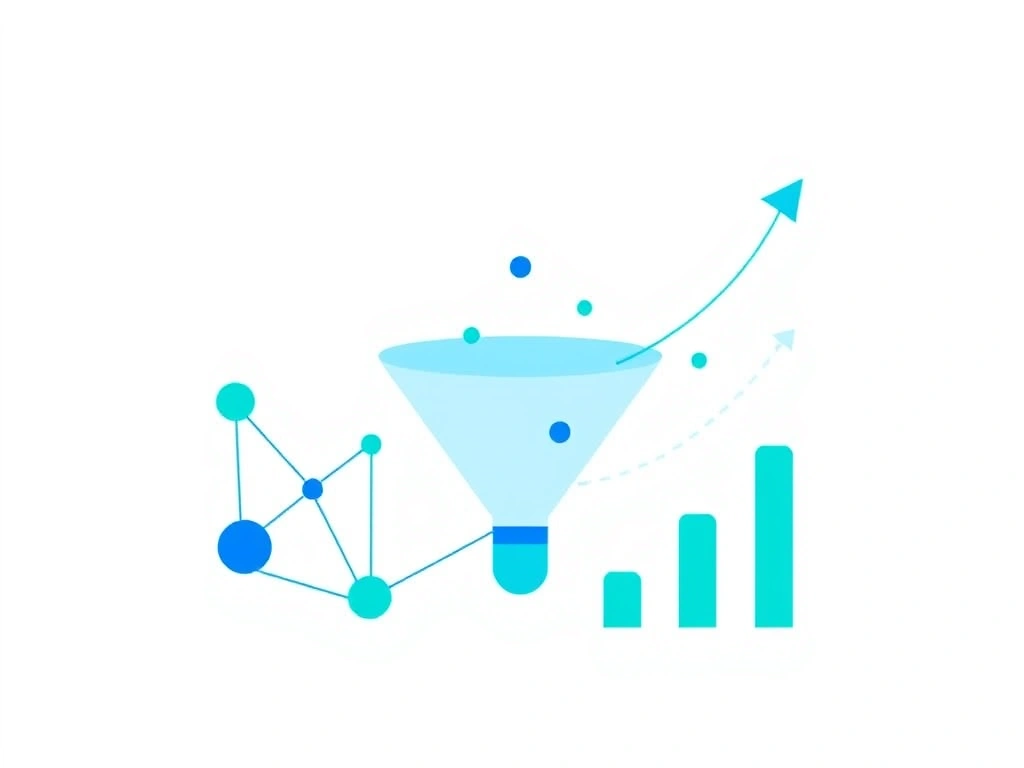
Understand your lead conversion rates at each stage of your sales funnel. How many initial contacts turn into conversations? How many conversations become qualified leads? How many qualified leads close as customers?
Identifying drop-off points allows you to focus your optimization efforts where they'll have the most impact. Perhaps your initial qualification process is too loose, or your follow-up sequence needs refinement. By continuously analyzing and refining, you can steadily improve your ability to generate B2B leads for your small business and turn them into paying clients.
Frequently Asked Questions
What's the most cost-effective way to generate B2B leads for a small business?
Content marketing (SEO-optimized blog posts, guides) and strategic networking/referral partnerships are often the most cost-effective methods, providing long-term value and high-quality leads with lower direct spending compared to paid ads.
How important is personalization in B2B lead generation?
Personalization is critically important, especially in cold outreach. Generic messages are easily ignored; tailoring your communication to the prospect's specific needs, industry, or company shows you've done your research and respect their time, significantly increasing engagement rates.
How quickly can a small business expect to see results from B2B lead generation efforts?
The timeline varies by strategy. Cold outreach (email, LinkedIn) can yield results in weeks, while content marketing and SEO typically take 3-6 months to gain significant traction. Referral programs can also build momentum over several months as relationships strengthen.
Should small businesses focus on quantity or quality when generating B2B leads?
Always prioritize quality over quantity. A smaller number of highly qualified leads that align with your ICP will yield a much higher conversion rate and better long-term customer value than a large volume of unqualified prospects.